
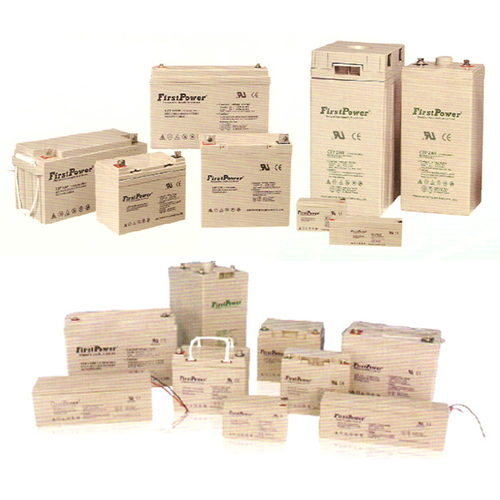
Description
Temperature Effects in Relation to Battery Capacity.
At a higher temperature, the capacity of battery increase and conversely at a lower temperature, the capacity of battery decreases.
Charging
Correct charging is one of the most important factor to consider when using valve regulated lead acid batteries. Battery performance and service life will be directly affected by the charging methods. There are four major methods of charging. Constant voltage charging, constant current charging, two stage constant voltage charging and taper current charging.
Effect of Temperature on Charging Voltage
As temperature rises, electrochemical activity in the battery increases. Similarly, as temperature falls, electrochemical activity decreases. Therefore, as temperature rises, charging voltage should be reduced to prevent overcharge, as temperature falls, charging voltage should be increase to avoid undercharge. In general, to assure optimum service life, use of a temperature compensated charger is recommended. The recommended compensation factor for FirstPower VRLA batteries is ± 3mV/ºC cell (standby use) and ± 4mV/ºC cell (cyclic use). The standard centre point for temperature compensation is 20ºC/68ºF.
Standby Life
The estimated life under float service of FP type is 5 years at 20ºC/68ºF; LFP type is 10 years at 20ºC/68ºF; CFP type is more than 18 years at 20ºC/68ºF. The float service life is effected by the factors listed above and the number of discharging, the depth of discharging the battery suffers during its life time. The more discharges suffered and the deeper the discharges, the shorter the battery life. The higher the temperature, the shorter the battery life. If the battery temperature remains at an elevated level for an extended period of time, the expected life is reduced by 50% for each 8 to 10ºC of constant temperature above 20ºC/68ºF.
Battery Storage
– General Storage Conditions:
The battery should be stored under the following conditions.
• Low humidity
• 5 to 104ºF (-15 to 40ºC)
• Clean and avoid direct sunlight
– Capacity after Long Term STorage
After long term storage, all batteries deliver less than rated capacity on first cycle. In cyclic application, full capacity may be obtained through several charge/discharge cycles, typically 2-3 cycles.
– Refresh Charge
When batteries are placed in extended storage, it is recommended that they receive a refresh charge at recommended intervals.
| Storage Ambient | Recommended Interval |
| Below 20ºC (68ºF) | 12 months |
| 20 to 30ºC (68 to 86ºF) | 6 months |
| 30 to 40ºC (86 to 104ºF) | 3 months |

Reviews
There are no reviews yet.